We are launching a voice control system that allows conference rooms to be operated by voice, without a single word leaving the room. It is still in beta. For us at SIGMA System Audio-Visuell, it is more than just a new feature: it marks our first step from being an integrator of third-party products to becoming a provider of our own solution.
Local voice control for meeting rooms: no cloud, no stored recordings
How a university partnership becomes a SIGMA AV product
Düsseldorf, 26. November 2026 | By the SIGMA editorial team | Article Information Interaction Conference Room
Test voice control in your own home: We’re looking for testers
Book a free consultation nowVoice-controlled room settings: one command, and the room is ready
“Hey Sigma, switch off the light above the table, raise the blinds and set the input to USB-C.” Two seconds later, the room is ready. Nobody has touched the touch panel; nobody has had to search for the right button.
In our demonstration room here in Düsseldorf, voice control has been running in test mode for about half a year. The difference compared to standard assistant systems on the market lies less in recognition than in the data path: a compact computer in the room handles everything, from the activation word to the handover to the control system. There is no internet connection and no stored voice recordings.
Operating conference room technology: Why meetings often get off to a rocky start
Media technology in conference rooms is operated via touch panels, buttons or apps. This assumes that users are familiar with the system’s logic. In everyday use, this is rarely the case. What’s more, every group leaves the room in its own state. The laptop is still plugged into the HDMI socket, and the screen remains black because the previous user’s source is still selected.
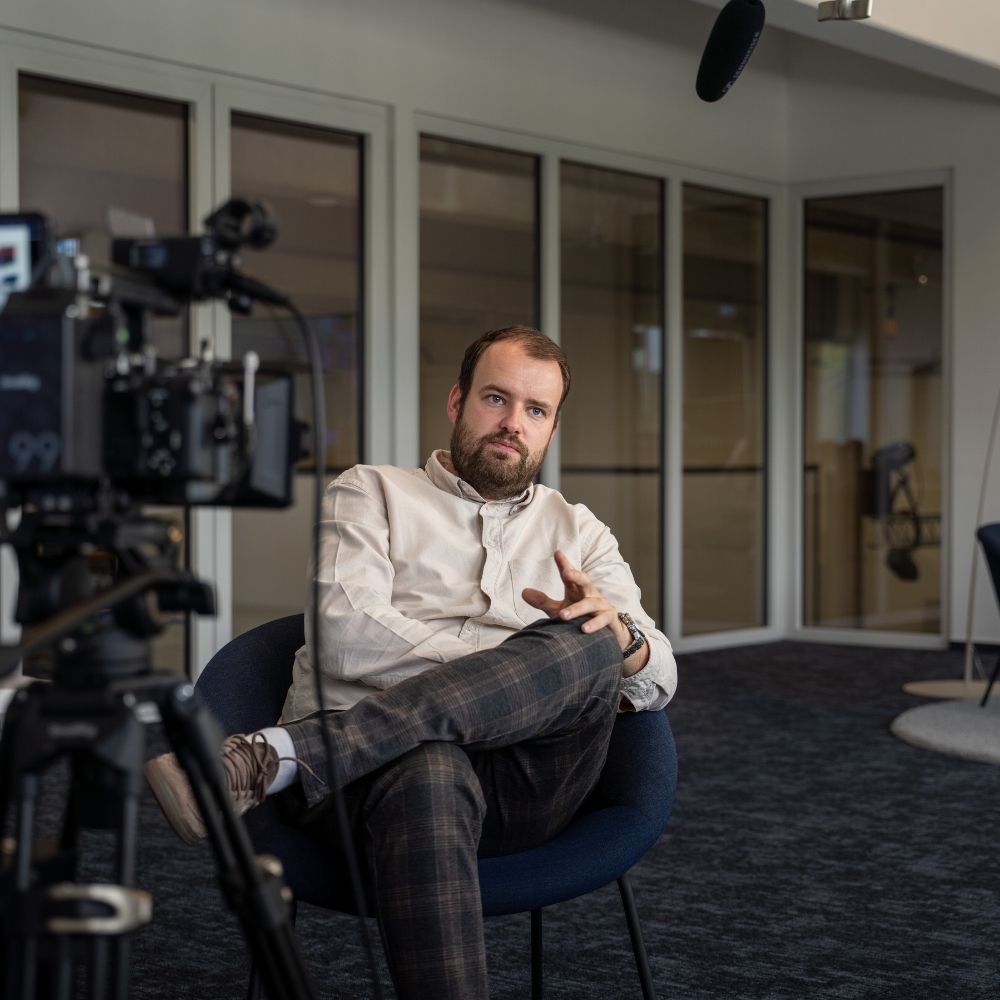
Stephan Nabbefeld, Managing Director at SIGMA, attributes this to developments in recent years: projects have become increasingly complex in terms of functionality, whilst user involvement has fallen by the wayside. There is a lack of analysis into what users bring with them and what they want to do in the first few minutes of a meeting. The result is a communication gap between the technology, the interface and the users.
Voice control therefore provides an additional level of operation. It accesses the same functions as the touch panel and does not replace it. It is relevant wherever technology needs to be usable without prior knowledge, and also contributes to accessibility.
Development of voice control: From Düsseldorf University of Applied Sciences to the beta phase
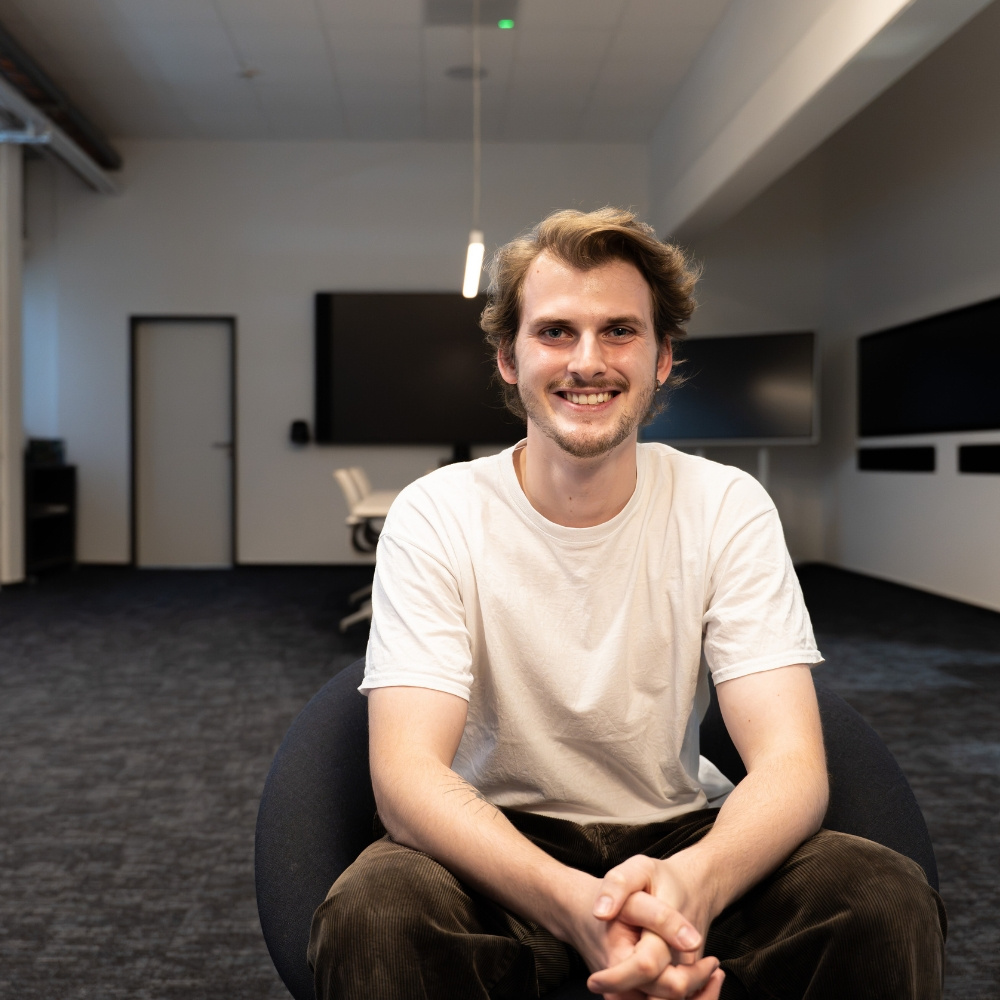
The idea originated through our collaboration with Düsseldorf University of Applied Sciences. We presented the concept to the university, where it was initially developed during a practical semester. In a second phase, Emil Ötting, a Bachelor’s student on the Data Science, AI and Intelligent Systems (DAISY) programme, continued to develop it during his placement with us, taking it through to the beta phase. The technical architecture was picked up by the specialist press: Professional System has dedicated an article to the solution in a special edition.
Stephan Nabbefeld, himself a graduate of the university, sees such collaboration as beneficial for both sides. Students bring skills to the table that traditional media technology training programmes do not cover, such as those in data science and AI. We, in turn, get to know potential employees outside the formal recruitment process. Given the staffing needs in the AV sector, this is more than just a side effect.
This arrangement has also been beneficial in terms of content. A developer without industry experience asks different questions about a conference room than an experienced integrator. In the project, Emil also faced the additional challenge of making assessments in a real-world business environment and standing by his decisions.
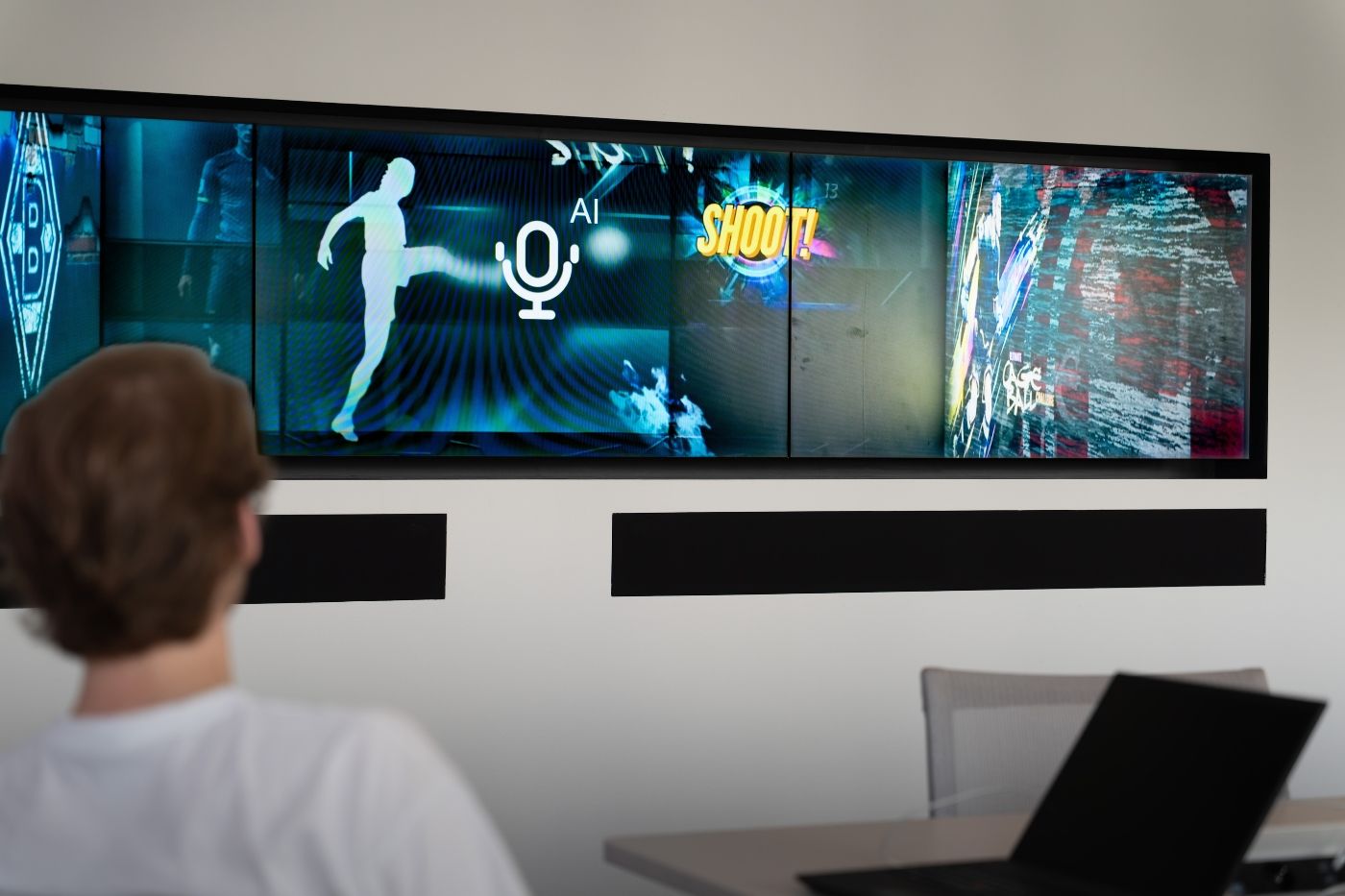
How local voice control works for meeting rooms
Voice control operates in four steps, all of which run locally within the room. When in standby mode, the system responds exclusively to the activation word, which is ‘Hey Sigma’ in the reference room. Nothing is recorded at this stage. When the word is spoken, a recording begins, which is stored only in the system’s working memory.
A local model converts the speech into text. A small, fine-tuned language model then determines which functions are being referred to. A verification stage checks these functions, with critical ones requiring additional confirmation. Only then is the command sent to the existing room control system. The language model itself has no access to the control system.
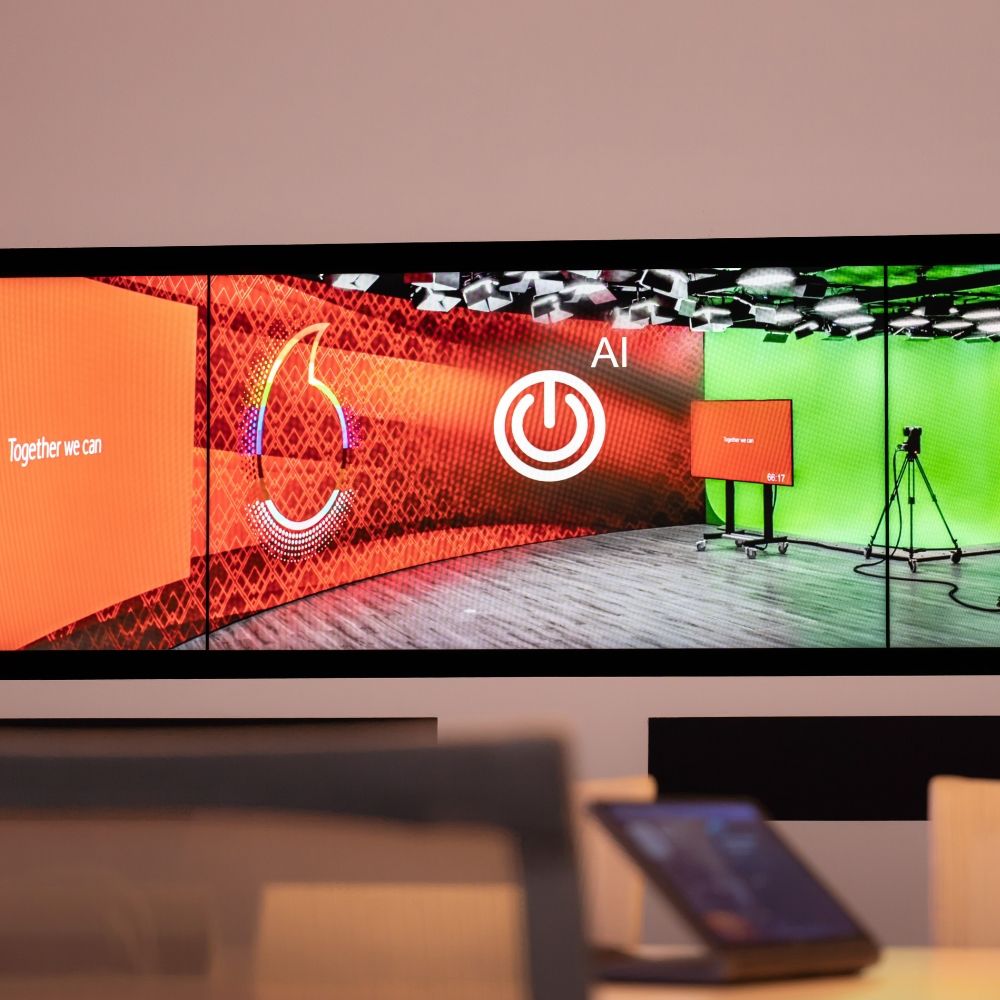
There is no fixed command syntax: what is said is crucial, not how it is said. Multiple instructions can be combined into a single sentence. An icon on the room display indicates whether the system is listening, processing or responding. Without this feedback, users would be speaking into the system whilst it is processing.
Data protection: voice control without the cloud and without an external data path
There is usually one main objection to voice assistants in meeting rooms: the cloud. This objection comes from IT departments and works councils. However, it is not speech recognition that is the problem, but the data path to the outside world.
With our solution, no data packets leave the room. Only control commands and a ‘sign of life’ – which triggers the status display – are transmitted. For your IT department, this is an end device on the media technology network, not a cloud service. Nor does the objection that AI requires a data centre apply here: small models are sufficient for room control.
From system integrator to in-house solution: the strategy behind voice control
Voice control marks a fundamental shift for us. A system integrator primarily works with third-party products, but also sees itself as a consultant and developer. Voice control is our first step towards our own solution that goes beyond mere device integration.
Why not just buy one? “We could simply buy a solution like this,” says Stephan Nabbefeld. “But it doesn’t exist in the form we need it and in the way we believe our customers need it.” Most available voice assistant systems are linked to home automation platforms and operate on a cloud-based basis. However, when it comes to sensitive data and voice recordings, we must be able to reliably assure customers that these will not leave the room.
That is why we are developing the solution not as a bespoke product, but as a product for any meeting room that meets the technical requirements. Nabbefeld believes that the fact such projects are rarely initiated in the industry is a question of attitude: the starting point must be a willingness to recognise that a better solution exists. Citing established processes is the wrong approach.
Voice control in beta: current status and key technical details
The voice control system is in beta. The internal testing phase is complete, and a reference room is currently operational at our premises in Düsseldorf. Invited customers have already provided feedback on the range of functions and operating logic.
The next step is to trial the system in real customer environments. This is where we need you: those in the development team know all too well how the system should be addressed. Only unbiased users can produce results that cannot be predicted in advance.
What matters in the room
Recognition quality is determined by the room, not the model. Ceiling-mounted microphones with beamforming and a DSP with noise reduction and echo cancellation are ideal. The software builds on your existing room control system, with the range of functions defined according to the room type. We take care of the planning, microphone placement and integration with your room control system as part of our AV integration service. If voice control fails or is switched off, the room remains fully operable via the touch panel.
Key technical specifications at a glance
- Status: Beta, internal testing phase completed
- Installations: One reference room at SIGMA AV in Düsseldorf
- Range of commands: 20 to around 50, depending on how they are counted
- Response time: Approximately 2 seconds from the end of the utterance
- Language: Standard German, expandable
- Activation: Activation word, customisable
- Processing: Entirely local, without an internet connection
- Audio data: Stored only in RAM, no permanent storage
- Additional hardware: Mac mini or equivalent, with at least 16 GB of RAM
- Integration: Software integrated into existing room control system; touch panel remains active
- Signal path: Ideally, microphone via DSP with beamforming and echo cancellation
Technical details on voice control: Technical article available for download
For anyone wishing to delve deeper: we have outlined the technical architecture of voice control – from local speech recognition to the verification stage prior to room control – in an article for the trade magazine Professional System. You can find the article from the special edition here as a PDF.

The 10 most frequently asked questions about local voice control in the meeting room
1. Is the system in the conference room constantly listening?
It only listens for the activation word. To do this, a lightweight recognition model runs on the computer in the room, which holds only a ring buffer in RAM for a few seconds. Recording only begins after activation, and even then, it is stored only in RAM.
2. Can the AI control the room’s technology independently?
No. The speech model merely determines which functions are being referred to. A verification stage checks them; critical functions are additionally confirmed, and only then is the command sent to the room control system. The model does not have direct access to the control system.
3. What can be controlled by voice?
Everything provided by the existing room control system, for example lighting, shading and media inputs. In the reference room, there are between 20 and around 50 functions. Multiple instructions can be combined into a single sentence.
4. Do you have to memorise fixed commands?
No. There is no rigid command syntax. What matters is the content of the statement, not its wording.
5. How quickly does the voice control system respond?
It takes around two to three seconds from the end of the utterance to the command being executed, depending on the hardware.
6. What happens if the voice control fails?
The room remains fully operable via the touch panel. The voice control system does not replace the existing room control system; it complements it. Updates, monitoring and support can be provided via our Managed Service.
7. What hardware is required?
A compact computer in the room, for example a Mac mini with a current multi-core CPU and at least 16 GB of RAM, as well as an existing room control system. For good recognition, ceiling-mounted microphones with beamforming and a DSP with echo cancellation are ideal.
8. What are the data protection implications?
Audio data is not generated as a file; it is stored only in RAM. What is relevant are the log files, which document recognised and executed commands as well as error locations. If logging is limited to timestamps, functions, parameters and error messages, the personal reference remains minimal. Retention periods and access restrictions should be included in the system documentation.
9. Which languages are supported?
Currently Standard German. Other languages are possible.
10. Where can I try out the voice control?
At the SIGMA AV showroom in Düsseldorf. SIGMA AV is seeking test partners for trials in customer environments.
